
Visualizzazione post con etichetta fashion. Mostra tutti i post
Visualizzazione post con etichetta fashion. Mostra tutti i post
4.06.2016


2.17.2015
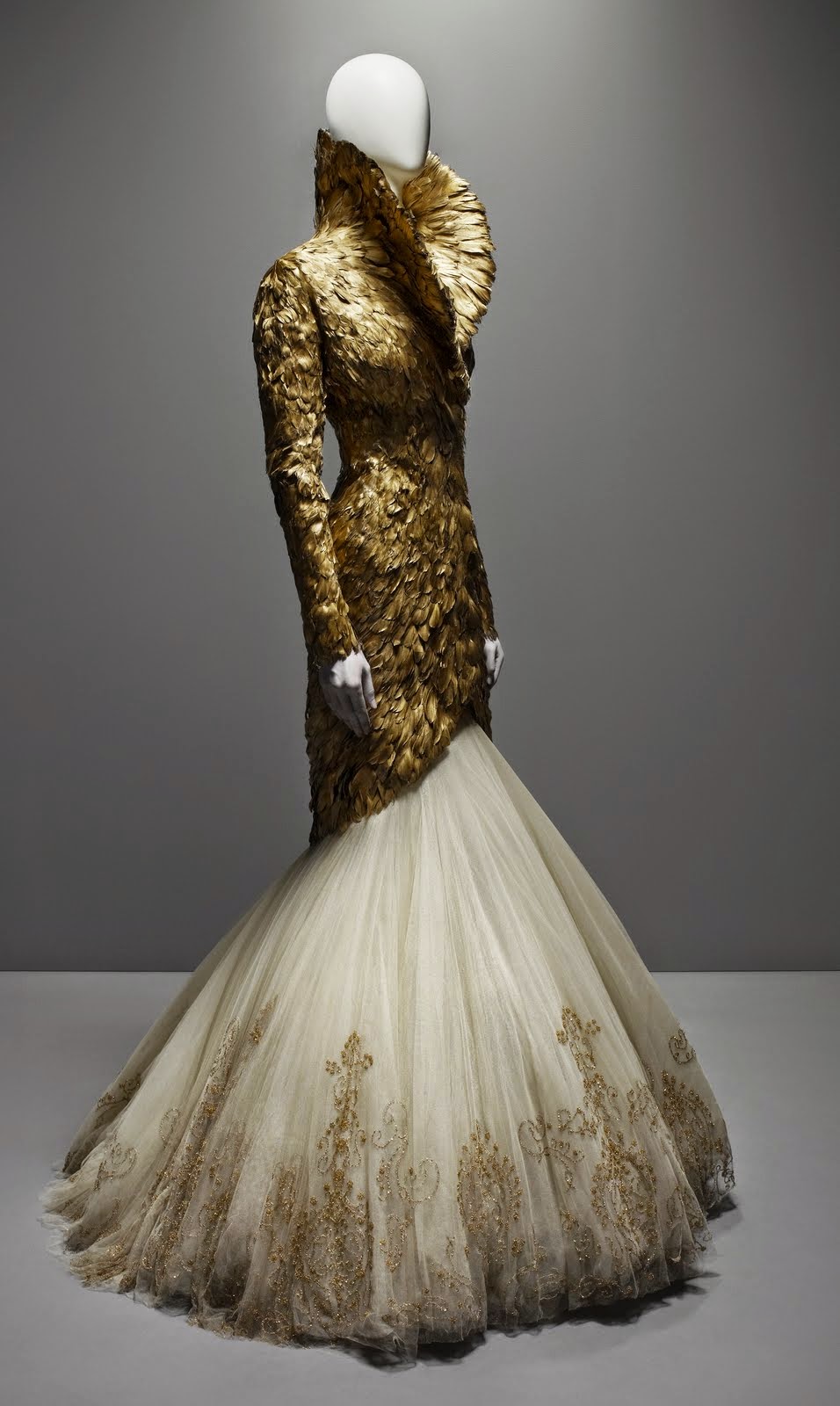
EXPOSITION - SAVAGE BEAUTY - Alexander McQueen exhibition in London
Savage Beauty, the Alexander McQueen retrospective that wowed New York in 2011 is finally almost In London. The exhibition will open in March 2015 at the V&A, marking the fifth anniversary of the legendary designer’s death, but most importantly it's a wonderful celebration of his life and work.

The exhibition provides a rare chance to see some of McQueen's hard to find early work, which will be on display. These pieces from the early 1990s – including his 1992 graduate collection ‘Jack the Ripper Stalks his Victims’, infamously snapped up by the late isabella Blow, an early champion – are incredibly rare. "He absorbed so many influences, in any one collection there were hundreds of ideas, hundreds of influences, all brought together," said Wilcox, and this is even true of his earliest work – like his Hitchcock-inspired SS95 collection 'The Birds', pieces of which will be featured.

Here below some of my fav pieces from AMcQ collections

 |
| Oyster dress SS 2003 |
 |
| Dress N°13 SS 1999 |




7.25.2014
PRODUCT DESIGN - Back pack by IF BAGS

This will be an IT bag, I swear!
Really cute backpack with a moderate price and gorgeous style, in addition you can costumize your own backpack choosing colors, tips and ropes!
This one is my own design from IF bags.
Enjoy


TEXTILE DESIGN - About Shibori
 Shibori is a Japanese technique of creating designs in dyed fabric. It is a dye-resist technique, using items that bind the fabric to create areas where the dye will not penetrate. Depending on the materials used and how the fabric is bound, the dyed designs vary from random splashes of color to highly symmetrical patterns. There are several different styles of this technique that are identified by the particular resist method used.
 The arashi shibori technique creates a diagonal pattern of color. The cloth is folded or twisted before being wrapped around a pole. After being wrapped around the pole, the cloth is compressed from end to end, scrunching the fabric along the pole. String is wound around the fabric to hold it in place while it is dyed. The resulting pattern often resembles lightning or rain.
Kanoko shibori involves gathering the cloth in sections and tying the sections with string or rubber bands. This dying technique is also known as tie-dye. The pattern is varied by gathering different amounts of cloth into sections and by changing the tension used to secure the sections. The dye absorbs into the fabric in a starburst style.
Yet another technique, in kumo shibori a person wraps sections of cloth around objects before the cloth is dyed. The cloth is wrapped around hard items, such as rocks or stones, and secured with string. This dye technique makes a spiderlike design in the cloth.


7.09.2014
FASHION DESIGN - RESORT COLLECTION 2015 // ELLERY
Here my fav looks, I had to say that all of them are an amazing mix in between a 70s feminine silhouettes and japanise volumes with an exquisite tomboy touch!

7.07.2014


3.07.2013
INSPIRATION - Botanic Illustrations
Vi è mai capitato un libo di botanica tra le mani?
-------- x x x x x x x x x x x x x x -------------
Prima che la fotografia ne decretasse il declino, l'illustrazione botanica aveva raggiunto livelli così eccelsi di qualità, precisione e verosimiglianza, che per molti esperti il disegno e l'acquerello sono in grado di rappresentare una pianta meglio di una qualsiasi fotografia.Per l'appunto, la figura di spicco nella storia degli illustratori botanici è Pierre-Joseph Redouté.Nato a Saint-Hubert (Ardenne belghe),è stato un pittore ed un botanico che divenne celebre per le sue pitture di fiori all'acquerello, e più particolarmente delle rose. Tanto che fu soprannominato "IL RAFFAELLO DEI FIORI".


Opere illustrate di Pierre-Joseph Redouté.
In quel periodo la Francia fu al vertice nel genere della pittura botanica ed insieme a Redouté collaborarono altri grandi artisti poliedrici di cui vi accenno i nomi più noti: Pancrace Bessa, Pierre-Antoine Poiteau, Jacob van Huysum.
Segnalo anche la curiosa Alida Withoos (1659 -1730 Amsterdam), è stata una pittrice e illustratrice olandese del secolo d'oro. Alida fu istruita dal padre assieme agli altri figli. Anche i suoi fratelli erano attivi come disegnatori di fiori,uccelli,farfalle e altri animali del sottobosco, tanto che queste immagini erano regolarmente chiamate " Withoosjes".
Per terminare con il lavoro di Albrecht Durer - La grande zolla, che anticipa di quasi tre secoli la minuziosa descrizione della natura, figlia dell'Età dei lumi.

Opera di Albrecht Durer
La grande zolla
------------
Qui sotto una stampa fotografica di ispirazione botanica tratta dalla collezione di Vivienne Westwood - Anglomania

9.24.2012
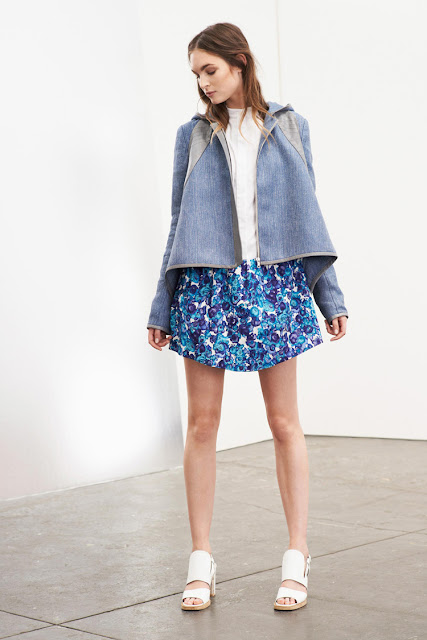
FASHION DESIGN - Thakoon design
Remember this name.
The Thakoon collection is a true reflection of the highly diverse background of its designer, Thakoon Panichgul. Born in Thailand, raised in Omaha and now New York-based, Panichgul’s creations blend various distinct influences with dynamic ingenuity. His work is an examination of innovative construction. His collection imparts a feminine spirit, poised elegance and an underlying hint of playful wit.
Upon earning a business degree at Boston University, Panichgul moved to New York to begin his career in fashion—first in production, then merchandising—laying the foundation to what has become a very well rounded background in the business. Prior to launching his own label, Panichgul spent four years as a writer and editor for Harper’s Bazaar, where he chased after style news, traced trends and developed fashion stories. Eventually, he decided to try his hand at design, leading him to enroll at Parsons School of Design.
In September 2004, Thakoon presented his first ready-to-wear collection, quickly becoming one of fashion’s most celebrated talents to emerge from the New York scene. In 2006 Thakoon was one of 3 recipients of the Vogue/CFDA Fashion Fund and also has been nominated by the CFDA for the Swarovski Award for Best Emerging Womenswear Designer. He developed a cult following and created a unique niche, consistently showing collections of beautifully crafted, feminine designs which are as romantic and sensual as they are modern and intelligent.
Panichgul is fascinated by decorative ideas that spin out of constructing clothes. Where classic patterns have existed for decades, the nuances involved in finishing the garments are reexamined or altered in some way. The subtleties, he believes, make all the difference.
--------------



The Thakoon collection is a true reflection of the highly diverse background of its designer, Thakoon Panichgul. Born in Thailand, raised in Omaha and now New York-based, Panichgul’s creations blend various distinct influences with dynamic ingenuity. His work is an examination of innovative construction. His collection imparts a feminine spirit, poised elegance and an underlying hint of playful wit.
Upon earning a business degree at Boston University, Panichgul moved to New York to begin his career in fashion—first in production, then merchandising—laying the foundation to what has become a very well rounded background in the business. Prior to launching his own label, Panichgul spent four years as a writer and editor for Harper’s Bazaar, where he chased after style news, traced trends and developed fashion stories. Eventually, he decided to try his hand at design, leading him to enroll at Parsons School of Design.
In September 2004, Thakoon presented his first ready-to-wear collection, quickly becoming one of fashion’s most celebrated talents to emerge from the New York scene. In 2006 Thakoon was one of 3 recipients of the Vogue/CFDA Fashion Fund and also has been nominated by the CFDA for the Swarovski Award for Best Emerging Womenswear Designer. He developed a cult following and created a unique niche, consistently showing collections of beautifully crafted, feminine designs which are as romantic and sensual as they are modern and intelligent.
Panichgul is fascinated by decorative ideas that spin out of constructing clothes. Where classic patterns have existed for decades, the nuances involved in finishing the garments are reexamined or altered in some way. The subtleties, he believes, make all the difference.
--------------


6.13.2012
FASHION DESIGN - Bio Fashion
BioCouture Fermenting
bacteria spinning solid skins, plant stalks interlocking to form
home-grown lace, human bone grown bangles: just a small selection of the
ideas that are born when textile designers meet biologists, material
scientists and physicists. Bridging the boundaries of science and
fashion, a series of projects are hoping to revolutionise the textile
industry, creating a cleaner future. On average for every kilogram of
textiles, 10 kilos of chemicals are used which are extremely harmful to
both our health and the environment – mainly affecting those in China,
India and other countries where these clothes are produced.

"Bridging the boundaries of science and fashion, a series of projects
are hoping to revolutionise the textile industry, creating a cleaner
future"
The Textile Futures Research Centre at University of Arts London is a hive of activity investigating "how can more sustainable futures be enabled by textiles?". Carol Collette, researcher
and course director of the MA Textile Futures course at Central Saint
Martins, is an enthusiastic explorer of the potential of synthetic
biology for cloth-making. Currently, she’s exploring a new concept for
producing lace grown from plants – dubbed BioLace Collette’s research
looks at apoptosis: the process in which cells are programmed to die for
the benefit of the whole organism – the way gaps between toes are
formed in a developing human. In plants, Collette hopes this could be a
way of growing the lattice-like lace structure.
Suzanne Lee is also part of the Textile Futures Research Centre,
where she has developed another textile growth technique which relies on
bacteria in a sugary green tea solution that spin microfibrils of pure
cellulose during fermentation, entitled BioCouture. These thin cellulose fibres form a dense skin layer on top of the liquid that can be harvested and dried.
Such collaborations look set to continue as a new initiative called The Textile Toolbox
launches next week between MISTRA future fashion and the Textiles
Environment Design at Chelsea Art School. The portal will provide an
open innovation platform for designers and experts to engage with and
foster new ideas for sustainable textiles and fashion, weaving paths for
the future of fabrics.
3.07.2012
FASHION DESIGN - Feit


Available in black and chocolate brown (all Goodyear constructed), this Naurale shade is a winner, even if it does have a touch of the Buffalo Bills about it. Feit also offer more sports and outdoors influenced styles, take a look over here for more.


Iscriviti a:
Post (Atom)